An eight week programme for students entering the first year of the IB Diploma Programme at Higher Level. In a group of six, you meet proof, complex numbers and vectors before the syllabus reaches them. When your class arrives at each one, you are seeing it for the second time.
Eight weeks · Live onlineMost students choose Analysis and Approaches Higher Level because mathematics has always come easily to them. I love that confidence. I also know what the first term can do to it.
HL Mathematics has a reputation for being the most demanding subject in the Diploma. Classes that start the year with ten students often end it with six. Often, the issue is the pace. A topic is introduced, examined and left behind within a few weeks, and the practising is expected to happen at home.
What changes is not the student. It is what mathematics asks of them. Proof arrives with nothing before it: no IGCSE or MYP topic prepares you to write an argument rather than an answer, and marks are lost for a conclusion that is merely implied. Complex numbers hand you an entirely new number system. Vectors arrives late, sits inside geometry and trigonometry, and chains four or five techniques into a single question. Ask HL graduates which topic shook their confidence, and vectors is the answer you hear most.

Every topic met before it arrives.
This programme gives you your first encounter with the topics that most often unsettle Higher Level students, before the syllabus reaches them formally. When they arrive in class, your classroom becomes revision.
The choice of topics is deliberate. Each one is either completely new at Higher Level, so nothing from earlier study can help, or known for needing more than one pass before it settles. Proof comes early because the rest of the course leans on it. Vectors gets the most time because it needs it.
Induction, contradiction and counterexample: learning to write an argument, not just an answer.
A new number system: the Argand diagram, polar and Euler form, De Moivre’s theorem and the roots of unity.
Permutations and combinations, expansions for negative and fractional powers, and decomposing a rational expression.
Lines and planes in three dimensions: intersections, angles and distances.
Each week holds one taught lesson, where I introduce and develop the new material through worked examples. Your place also includes membership of the Practice Room for the term, so the practice carries on between lessons with five problems a week and a written commentary every Saturday. That independence is deliberate. It is how creative problem solving and confident thinking grow, and how each week’s ideas settle before the next topic begins.
This is for a student starting DP1 who has chosen Higher Level and plans to stay there. It is not catch-up tutoring, and it does not follow the school’s homework. We work ahead of the syllabus, not behind it.
Cohorts hold six students. A group of six is close work. Every proof is read, every misreading is caught, and nobody watches from the back.


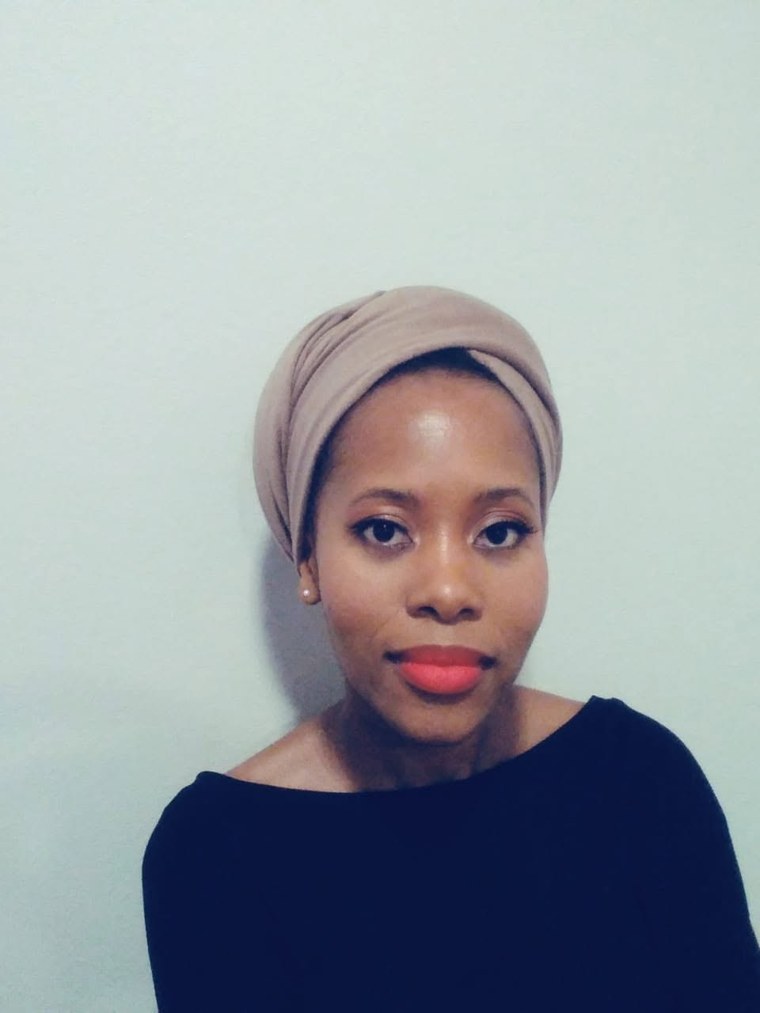
Lerato Molisana is a mathematician and writer. She holds a BSc in Mathematical Statistics, earned in South Africa, and an MFA in Creative Writing, completed with distinction in the United States as a Fulbright Scholar. She founded MathBridge Academy on a single conviction: mathematics is a language, and students can be taught to read it, write it and think in it.
This programme is one part of the academy. To understand MathBridge more fully, from our one to one courses to our journal, visit the main site.
A cohort begins on its published start date, and enrolment closes when the sixth place is taken or when the cohort begins, whichever comes first. Every lesson leaves you with worked notes and a problem set of your own.
Unsure whether Higher Level is the right choice? Read The Second Impression.
Leave your details and we will write to you with the next cohort’s dates. If the six places are already taken, you are first in line for the one after.